Faan1jik6 Zi1gaan1
(In Between Translations)
A group Exhibition
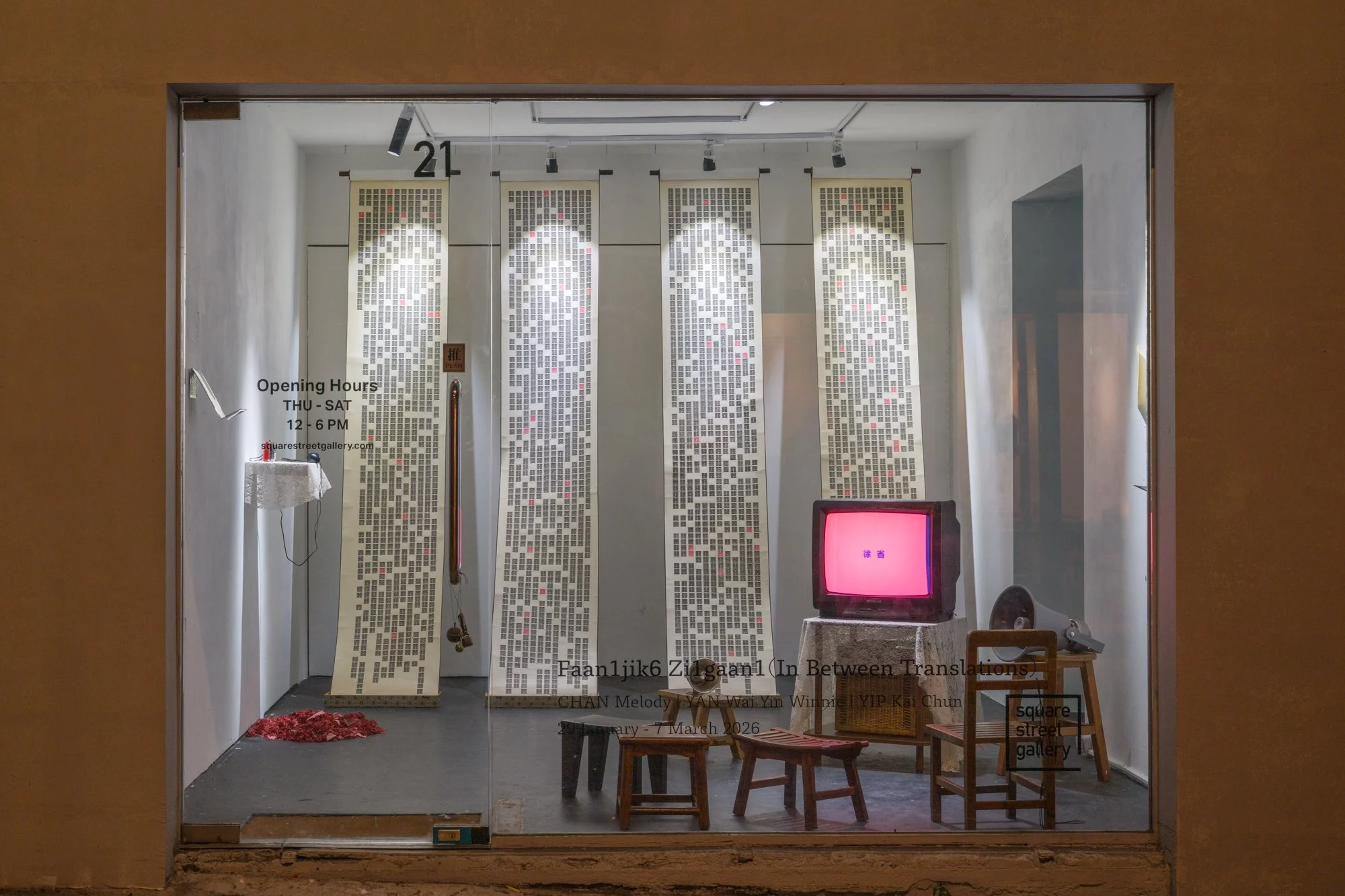
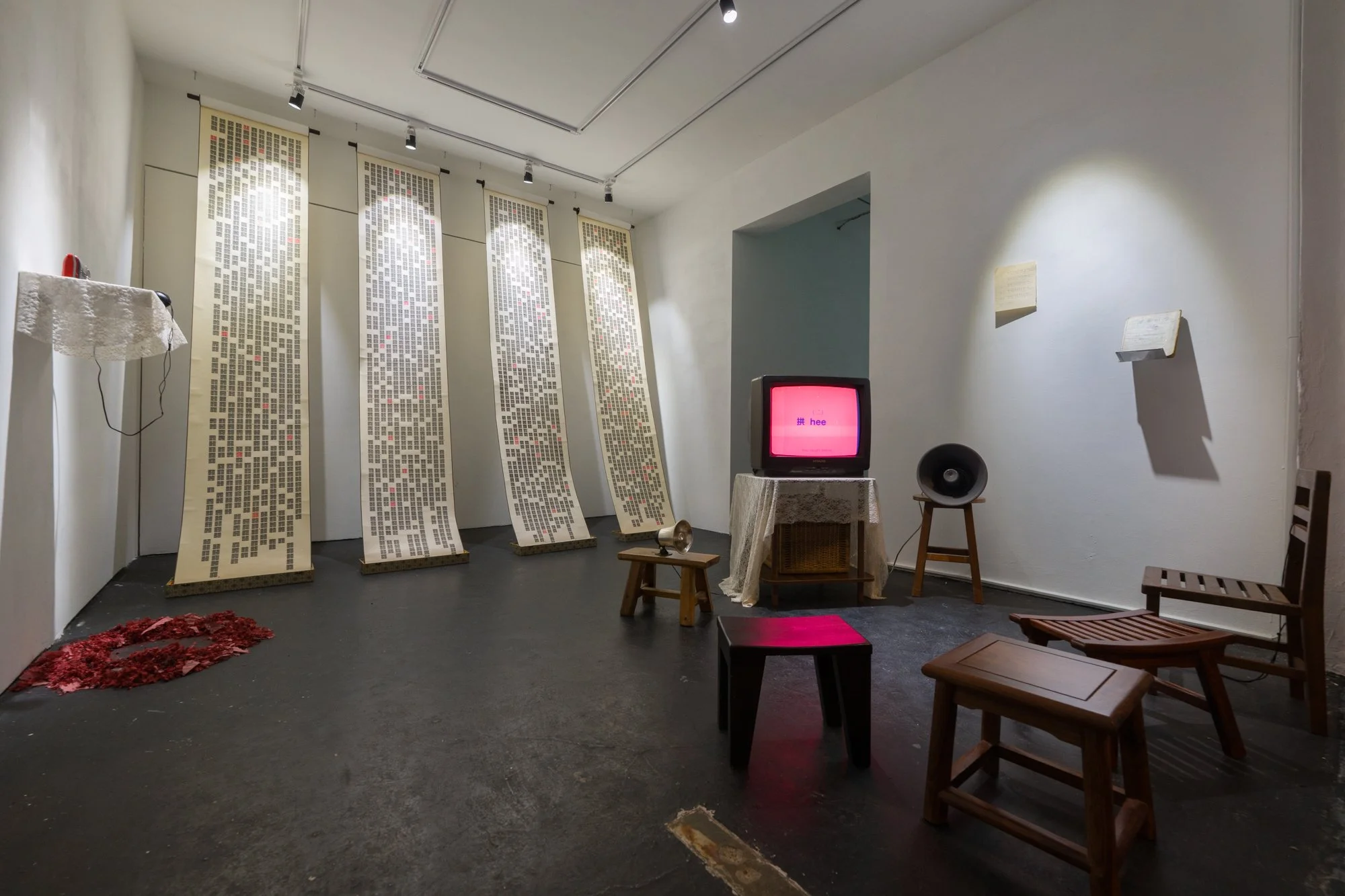
Faan1jik6 Zi1gaan1(In Between Translations) - Exhibition views - Photographer: Felix SC Wong @asia_art_hopper
PRESS RELEASE
Faan1jik6 Zi1gaan1(In Between Translations)* is a group show on language presenting artists working in a translational process. They explore how the transmission of information can fluctuate between being an exposing or obscuring act.
CHAN Melody, YAN Wai Yin Winnie and YIP Kai Chun, are three artists looking at what escapes clear and straightforward communication, favouring simultaneous interpretations instead. We are met with multiple forms of language converging and transforming, resulting in works reflecting on history, personal heritage, legitimacy and memory. Through installations and videos, Chan, Yan, and Yip reveal language to be a contentious site with as much potential for gain as it does for loss.
Language is a negotiation of/with/in the world, an interpretation of observations and thoughts into spoken or written symbols. Often seen as a transparent line of communication, it leads us to omit its potential for distortion and rupture. The information we digest is understood as being based on a certain stability, something established and fixed, rather than a fluid and shifting operation dependent on multiple factors, such as culture or politics. Similarly, translation is taken as an act of exposure providing a revealing equivalent: traversing a language through another is regarded as an honest unveiling, rarely viewed as a form of encryption where data is lost as much as comprehension.
The impossibility of complete translation mirrors the impossibility of an absolute language. Language itself could be understood as translation: the act of naming something is but the translation of an object, dependent on perception attached to the goal of mimesis, which then produces meaning. These two notions are interrelated in the way spokes are to a wheel, they form an ensemble where one upholds the other and are one and the same.
The artists in this exhibition treat language as a mutating object, using translation as a tool to dismantle its perceived reliability. In their process, they urge us to question whether incomprehension and opacity render language completely impenetrable, or if ambiguity can instead be a potent doorway to reconfigure our relationship between knowledge, visibility and understanding.
* Faan1jik6 Zi1gaan1 is the Cantonese romanisation (a phonetic alphabetisation) of ‘翻譯之間’ which means ‘In between translations’.
Text by: Amandine Vabre Chau
Faan1jik6 Zi1gaan1* (翻譯之間) 是一場以語言為主題的群展,呈現藝術家如何在翻譯 過程中創作,並探討訊息傳遞如何在「披露」與「遮蔽」之間遊移不定。
陳逸韻、忻慧妍與葉啟俊三位藝術家聚焦溝通中難以言喻之物,採用多重詮釋的視角, 將語言形式交疊、變形,引導我們在這次展覽中反思歷史、正統性、個人傳承及記憶等議題。透過裝置與影像作品,三位藝術家揭示出語言作為一個充滿爭議的場域——它既能孕育出新的理解,同樣亦伴隨著某種流失。
「語言」是與世界、在世界之中、透過世界進行的協商,是將觀察與思想轉化為口語或書寫符號的詮釋過程。它常被理解為透明的溝通媒介,使我們容易忽略其扭曲與斷裂的隱患。我們所接收、消化的資訊,往往被理解為建立在某種穩固不變的基礎上,而非一個受文化、政治等多重因素影響、持續流動變化的操作。同樣地,翻譯常被視為一種「披露」的行為,彷彿從一種語言穿越到另一種語言,就已經忠實、坦誠地披露了某種真相;很少有人同時把翻譯看作一種「加密」的方式。而在這個轉換過程中,流失和獲得的訊息一樣多。
「完美翻譯」的不可能性,映照出「絕對語言」的不存在。語言本身就可以被理解為一種翻譯:為某事物命名,不過是將物件轉譯成符號,依賴於對摹仿目標的感知,從而產生意義。這兩個概念相互依存,構成一個整體,彼此支撐、實為一體兩面。
本次展覽的藝術家將語言視為一個不斷變異的對象,以翻譯為工具拆解其表象的可靠性。藝術家的創作使我們反思:語言是否真的會因為晦澀難懂而變得完全無法理解?抑或,模糊性本身反而能成為一扇強有力的門,讓我們重新構建知識、可見性與理解之間的關係?
* Faan1jik6 Zi1gaan1 是「翻譯之間」的廣東話羅馬拼音(一種音標轉寫)。
WORKS AND ARTISTS
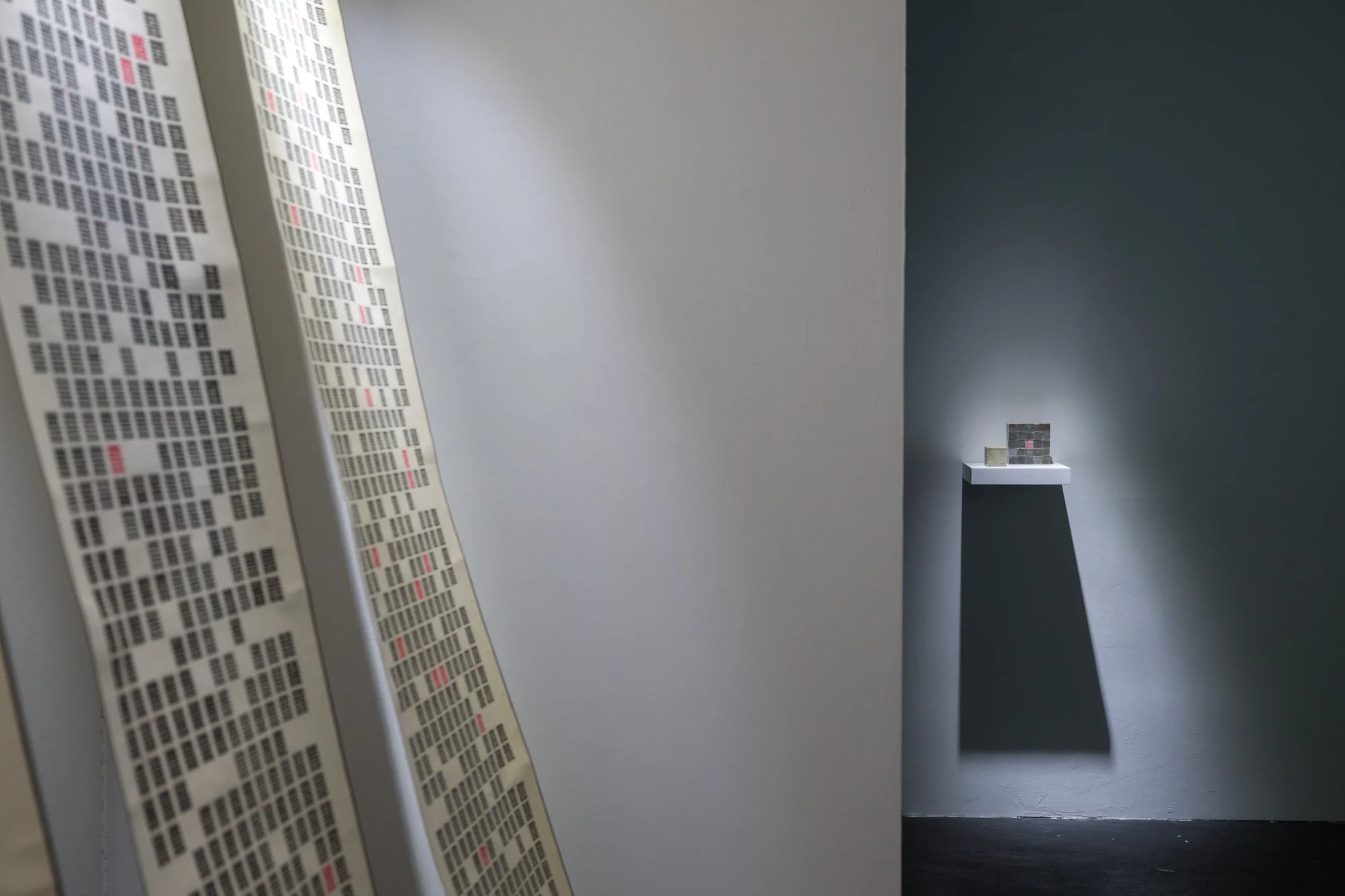
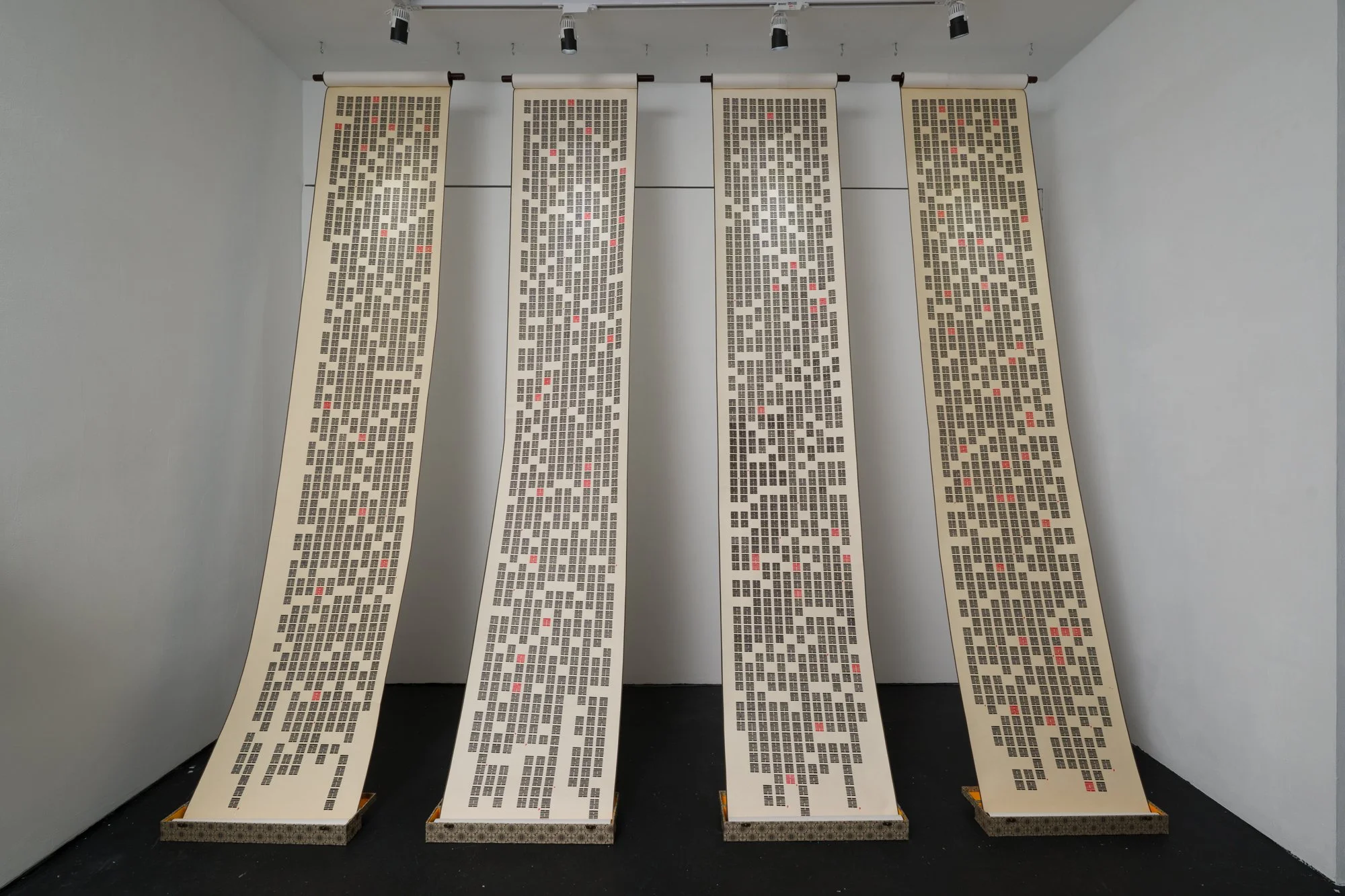
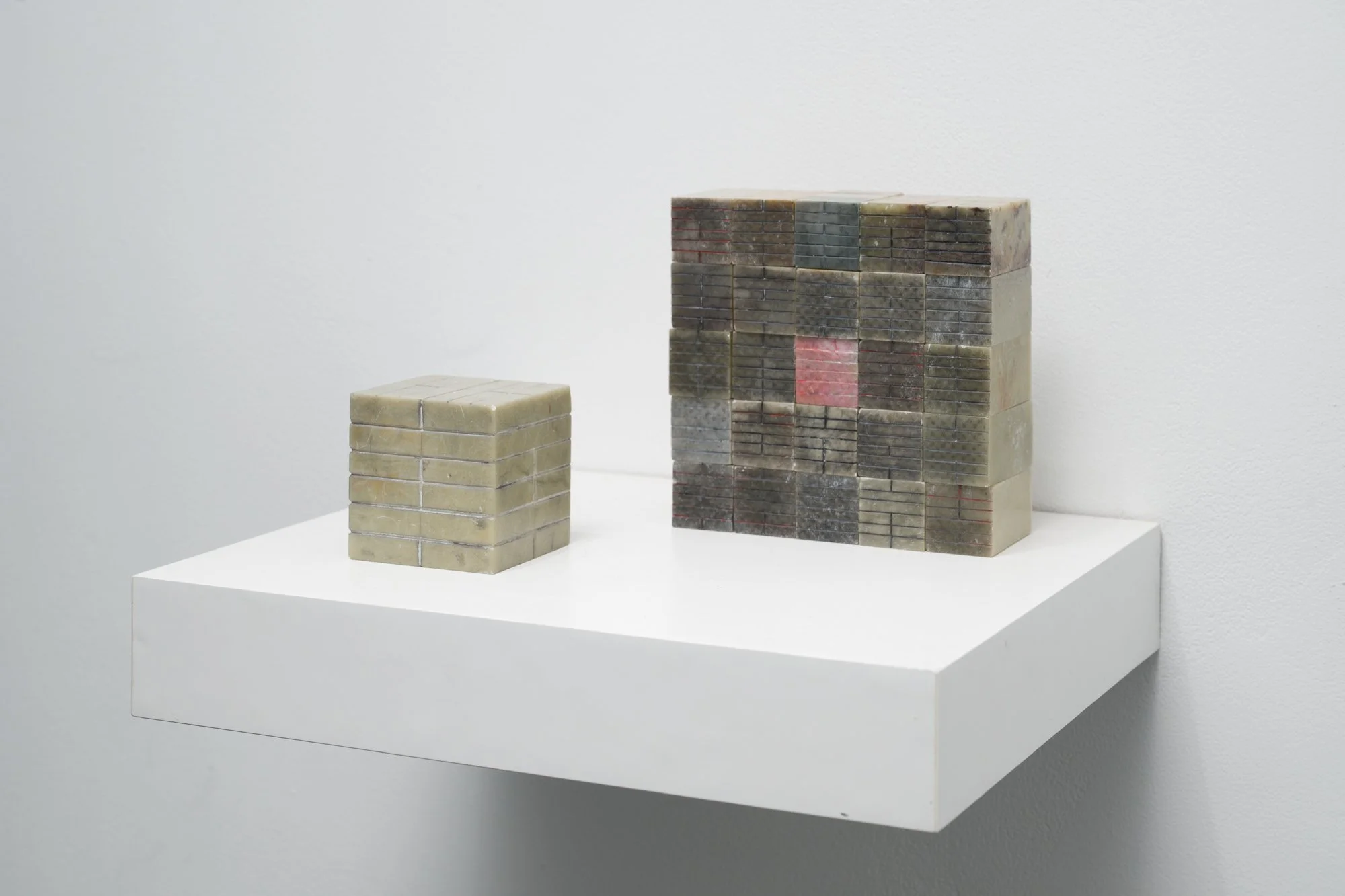
Mind Palace - Melody Chan - Exhibition views - Photographer: Felix SC Wong @asia_art_hopper
CHAN Melody - Mind Palace
Melody is a Hong Kong-Macau artist, whose background as a mathematics teacher echo throughout her work. With a practice that centers around ancient Chinese culture, science and mathematical analysis, she provides a complex and entangled ensemble of research.
Mind Palace is an encrypted visual installation exploring the significance of symbols in written communication, visual transmission, and their meaning in a civilisational context. Using encryption as her primary tool, an act we can consider as concealment and translation, she bridges seemingly distant aspects of divination, computation and semiotics.
The work consists of 4 long scrolls hanging from the ceiling, reminding us of Xu Bing’s ‘Book from the Sky’. It can be read from top to bottom, left to right, hinting at traditional Chinese writing while also recalling computer literacy with its display of codes.
For this work, Chan merges binary logic with the I-Ching hexagrams, symbols used in ancient Chinese divination. The resulting language here is not composed of zeroes and ones, but in variations of 6 stackable horizontal lines which encode the English alphabet. The hexagrams are both a visual representation and a corresponding statement of an underlying message. Playing with multiplicity, the artist emphasises the simultaneity of interpretative signs.
The deciphered text is a combination of her personal writing woven with that of philosopher and mathematician Gottfried Wilhelm Leibniz, the inventor of the binary code. Dancing between the personal and the universal, the visible and invisible, Chan loops into and within multiple narratives. She makes written content a visual maze, blurring the information under ciphers, and questions the efficiency of language while pondering on the poetic qualities of it. She hides, translates and interprets. Provoking thoughts of whether it is relevant to comprehend the content or just the intent, whether the transformation itself can be the subject, and what form can translation take in our day and age. Symbols and their manifestations are carriers of logic and meaning to her, which can take many forms and be reinterpreted. Chan carefully considers the interconnectedness of the elements she studies and highlights their potential for transcending boundaries, she shapes them into tools of interpretation and revelation, asking us to probe deeper into what we see, hear and understand.
陳逸韻 -《寄興深微》
陳逸韻的數學教師背景深深滲透於她的創作之中。她的藝術實踐以中華文化、科學與數學分析為核心,呈現出一套錯綜複雜且相互交織的研究。
《寄興深微》是一件加密視覺裝置作品,旨在探索符號於書寫溝通及視覺傳播中的重要性、份量、以及它們在文明脈絡下的意義。她以「加密」作為主要創作手段,這種手法既是隱藏訊息的行為,亦是另一種形式的翻譯——從而將占卜、運算與符號學這三個看似疏遠的領域連結起來。
作品由四幅從天花板垂掛的長卷軸組成,讓人聯想到徐冰的《天書》。作品採由上而下的閱讀方式,既呼應了中文傳統的書寫慣例,又隱含電腦語言與程式碼的顯示方式。對藝術家而言, 符號及其顯現形式乃是邏輯與意義的載體;它們能以多種形態存在,並被重新詮釋。
這件作品中,陳逸韻將二進制邏輯與《周易》卦象融合——這些卦象是中國古代占卜中使用的符號。這裡的信息不再以一和零表示,而是透過6條堆疊水平線的變化來編碼英文字母。卦象既是一種視覺表現,也是一種對應隱含訊息的陳述。它們是多重性的標記,揭示了符號詮釋的 多義並存。
解碼後的文本結合了她個人的書寫,以及二進位碼發明者——哲學家兼數學家戈特弗里德·威廉·萊布尼茲(Gottfried Wilhelm Leibniz)的著作。遊走於個人與普世、可見與不可見之間,陳逸韻在多重敘事與詮釋之中穿梭。她將書寫內容轉化為一座視覺迷宮,透過密碼模糊了訊息,質疑語言的有效性,同時思索語言的詩意特質。她隱藏、翻譯、詮釋,引發觀者思考:理解內容本身是否重要,抑或意圖才是重點?轉化過程本身能否成為內容?在我們這個時代,翻譯能以何種形式存在?藝術家仔細考量她所研究元素之間的相互關聯性,並揭示它們跨越界限的潛力;她將這些元素轉化為詮釋與啟示的工具,邀請我們深入探究所見、所聞與所理解的一切。
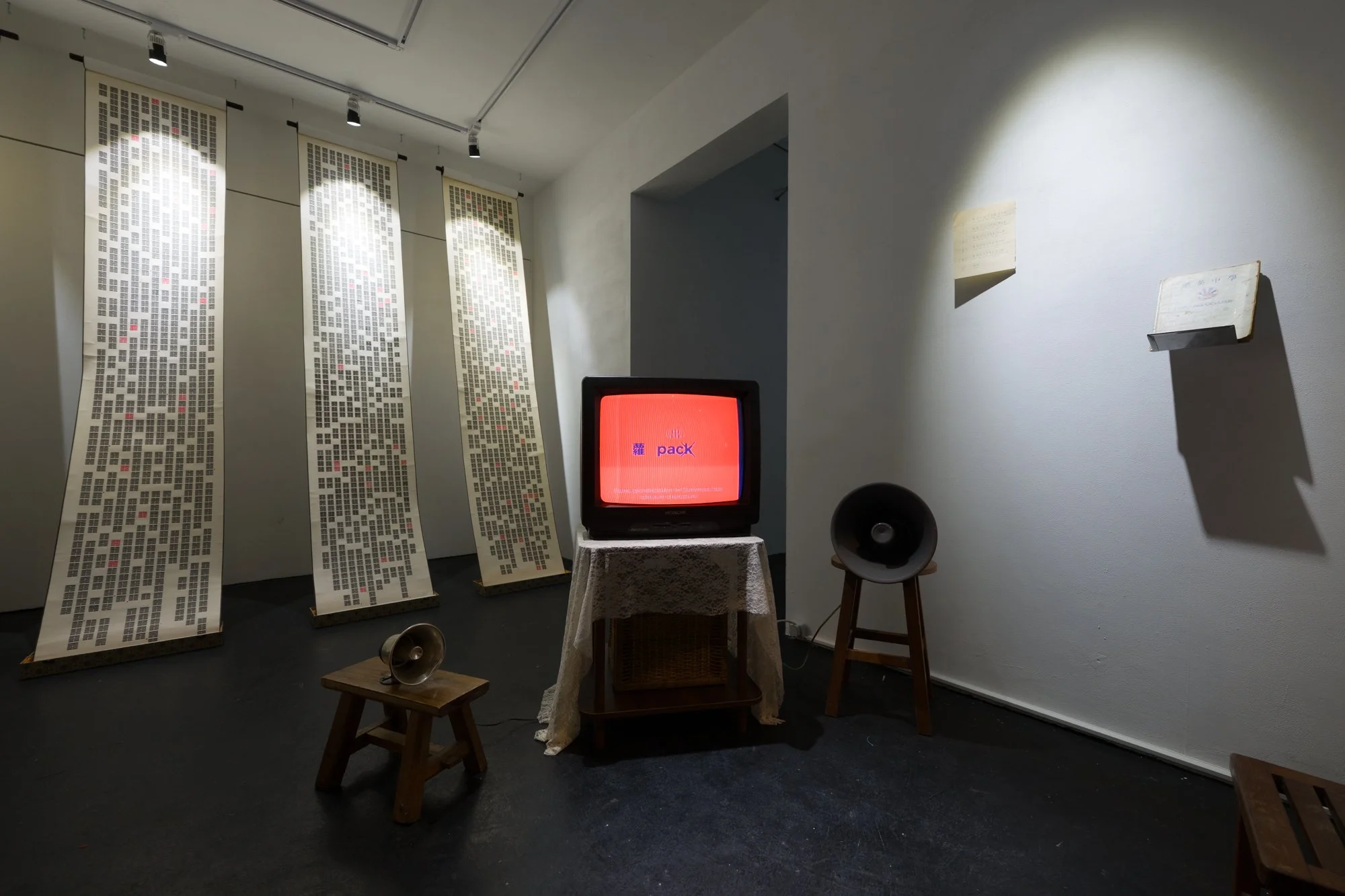
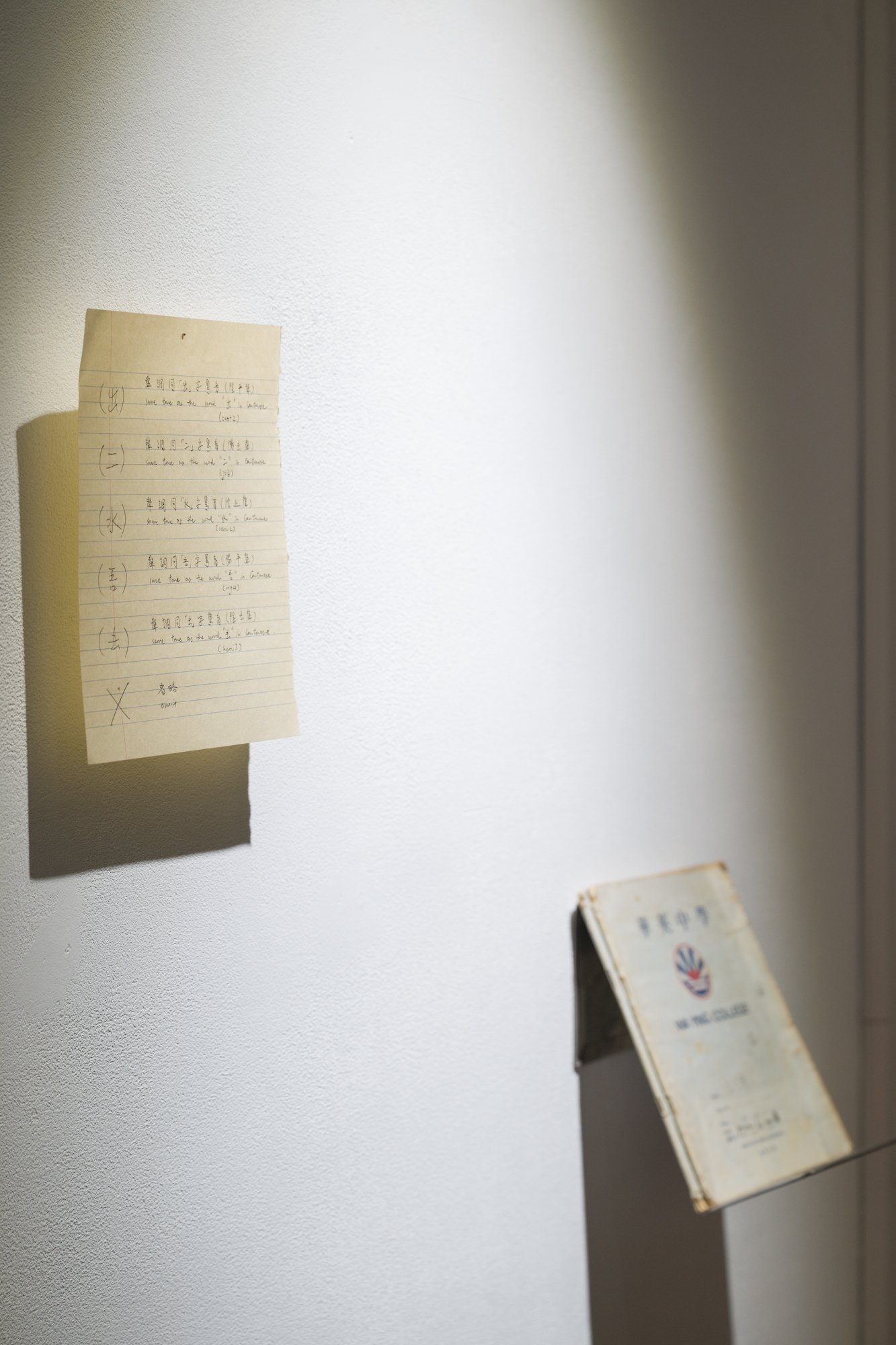
崖hea響槓言 voice from the root, reclaiming - Kai Chun Yip - Exhibition views - Photographer: Felix SC Wong @asia_art_hopper
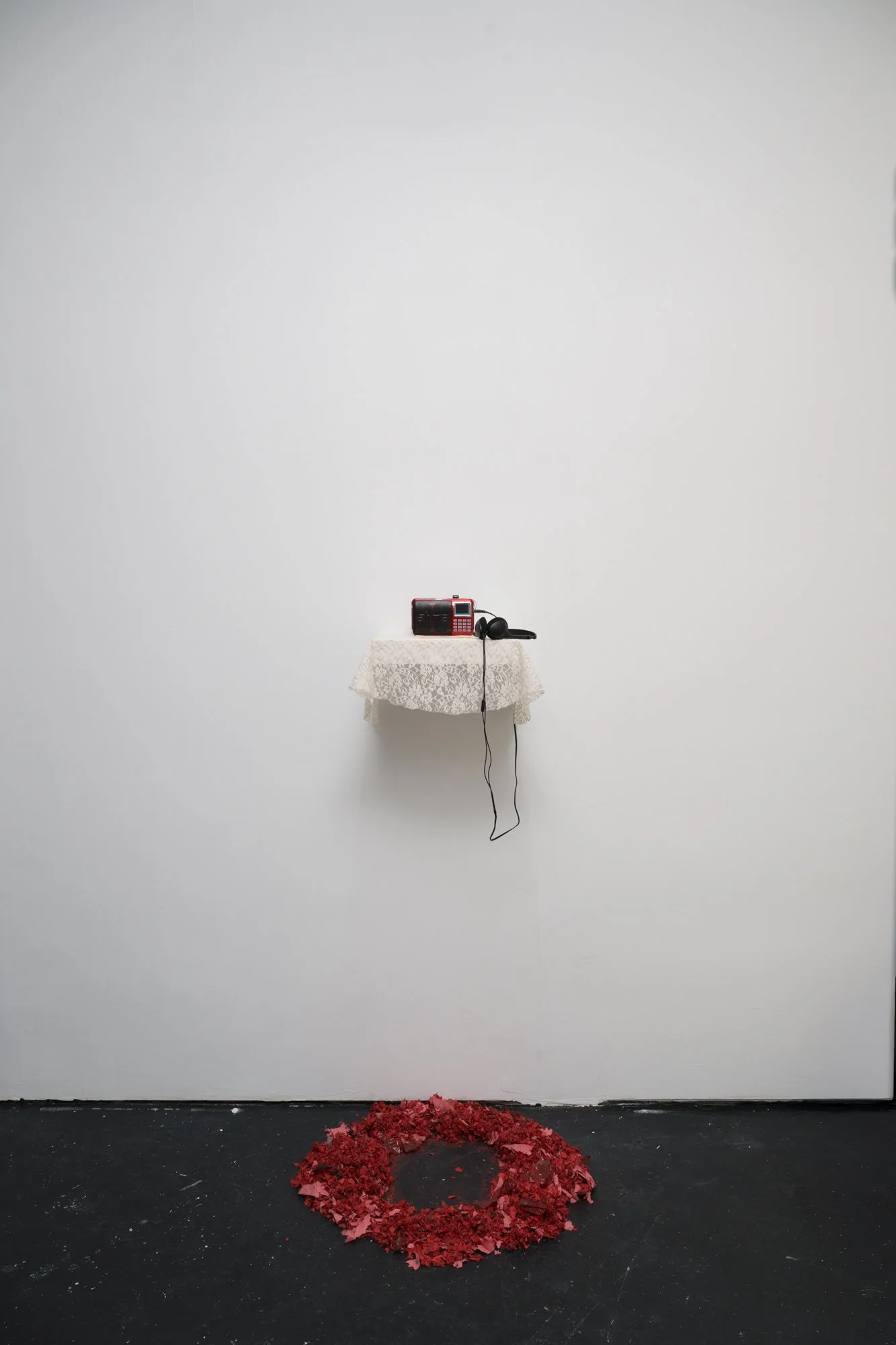
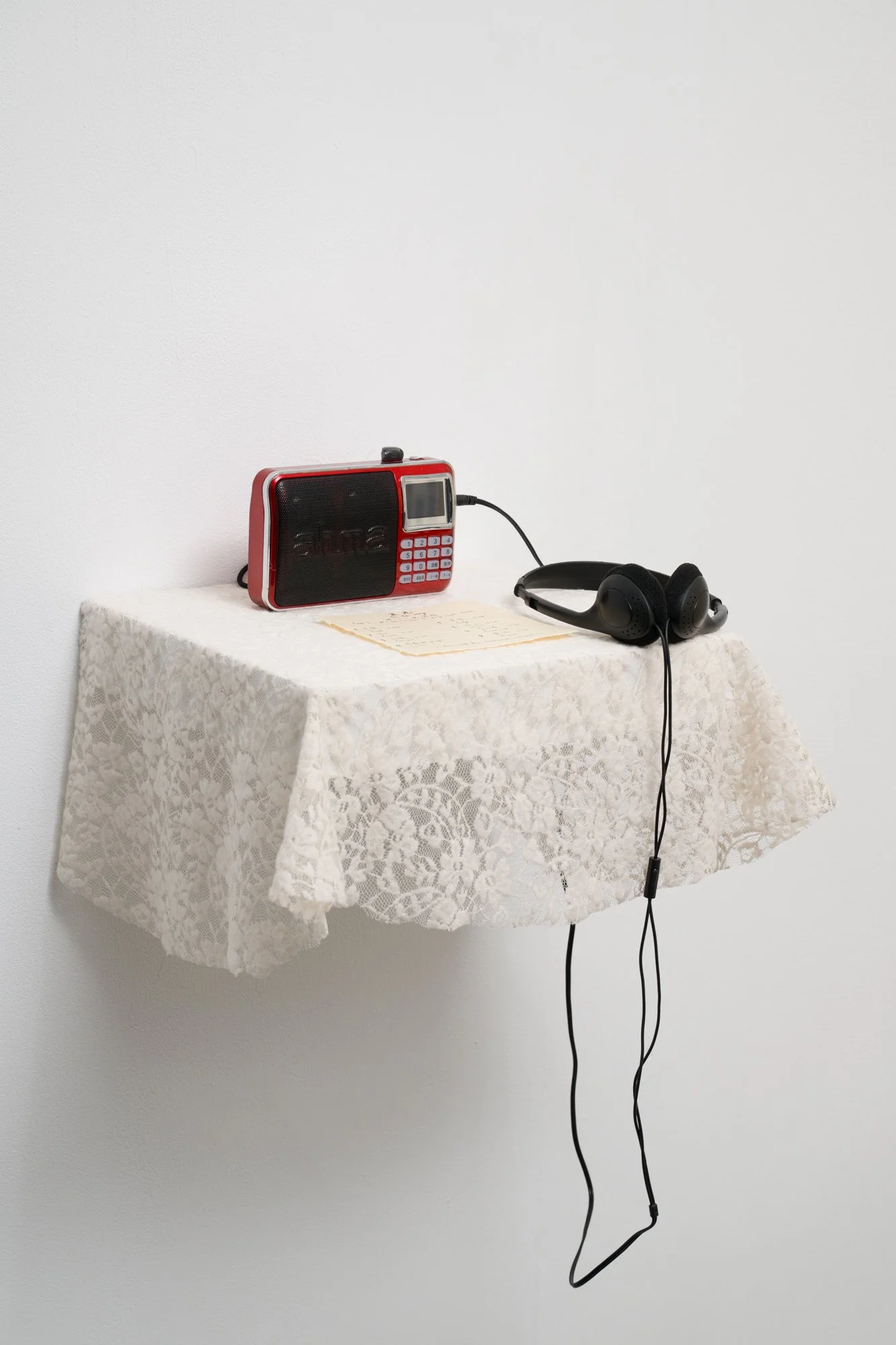
YIP Kai Chun - 崖hea響槓言 voice from the root, reclaiming
Yip Kai Chun is a Hong Kong artist working across a variety of mediums. With a research oriented and socially engaged approach, the artist is interested in peripheral communities and locality in the context of migration.
Yip has explored his heritage extensively, notably by looking at ways to analyse and play with his father’s native tongue, Hakka. Unable to speak it, language becomes a site of tension for the artist, where discovery meets loss and the restless coupling of breakthrough and forfeiture engenders questions of legitimacy and cultural dispossession.
After living as a ‘Hong Konger’ for more than 20 years, Yip started questioning his identity, leading him to open a dialogue with his father to learn the language. He proceeded to record their conversations over the span of two years. These pedagogical sessions were laced with intimacy while hinting at gaps in his inheritance, a common friction in our times where dialects are waning ever more so.
In order to learn these new words, the artist invented a written hotchpotch of Hong Kong Cantonese, Putonghua pinyin, English and self-invented marks to pinpoint the right tones. These marks crystallise both a desire and fragmentation in his process, indicating aspirationand alienation. Yip transformed these recordings into the present installation 崖hea響槓言 voice from the root, reclaiming assembled into a domestic enclave. Words flash across the red screen, creating a sharp rhythm as if calling for us to repeat them. A hypnotic cadence takes place, inviting the audience to participate in this journey. Sitting close to the screen, we hear both the son’s and the father’s voice– a scratchy and nostalgic sound, distant but alive with familiarity. A sometimes confusing space set between revelation and omission.
There is a ghostly quality to his work, as if entering into someone’s emptied living room, the footsteps of its inhabitants echoing in the distance. The decomposition of identity resonates through the rhythmic display, drifts appear with moments of pauses, reflection and laughter.
葉啟俊 - 《崖hea響槓言 voice from the root, reclaiming》
葉啟俊是一位香港藝術家,其創作涉獵多種媒介,包括混合媒介裝置、錄像及聲音。他以研究為導向,以社會參與的創作途徑,致力於探討在移民背景下的邊緣社群與本土性議題。
他深入探索自身的文化根源,尤其是透過各種方式去分析並玩味父親的母語——客家話。由於不會說客家話,語言對這位藝術家而言成了一個充滿張力的場域 。在此處,發現與失落交會,「突破」與「喪失」之間那種躁動不安的交織,引發了關於正統性與文化剝奪的叩問。
以「香港人」的身份生活了二十多年後,葉啟俊開始質疑自己的身份認同,這促使他向父親主動提出想學習客家話,並著手錄下兩人為期兩年的對話。這些教學過程交織著親密感,亦顯露他在文化傳承上的斷層;——在本土語言日益式微的當下,這也是我們這個時代常見的摩擦。
為了掌握這些陌生的詞彙,藝術家自創出一套混雜的書寫系統:融合香港粵語、普通話拼音、英語,以及他自創的符號來標註正確的聲調。這些符號凝聚了他在學習過程中的渴望與碎片化狀態,揭示出其中的嚮往與疏離感。葉啟俊將這些錄音轉化為眼前的裝置作品《崖hea響槓言》,並組建成一個具居家感的「飛地」。字詞在紅色螢幕上閃現,營造出鮮明的節奏,彷彿在召喚我們跟著覆誦。一種催眠般的韻律隨之而生,邀請觀眾參與這段旅程。坐在靠近螢幕處,我們能聽到兒子與父親的聲音——沙啞而懷舊,遙遠卻帶著熟悉的生命力。
他的作品帶有某種幽靈般的氣息,仿佛走進一間空無一人的客廳,居住者的腳步仍在迴盪著。身份的分解透過節奏性的影像顯現,飄忽的停頓、反思與笑聲交替出現。讓我們靠近螢幕,坐在矮凳,專注沉浸在這個令人困惑的空間——遊走在「揭示」與「遺漏」之間。
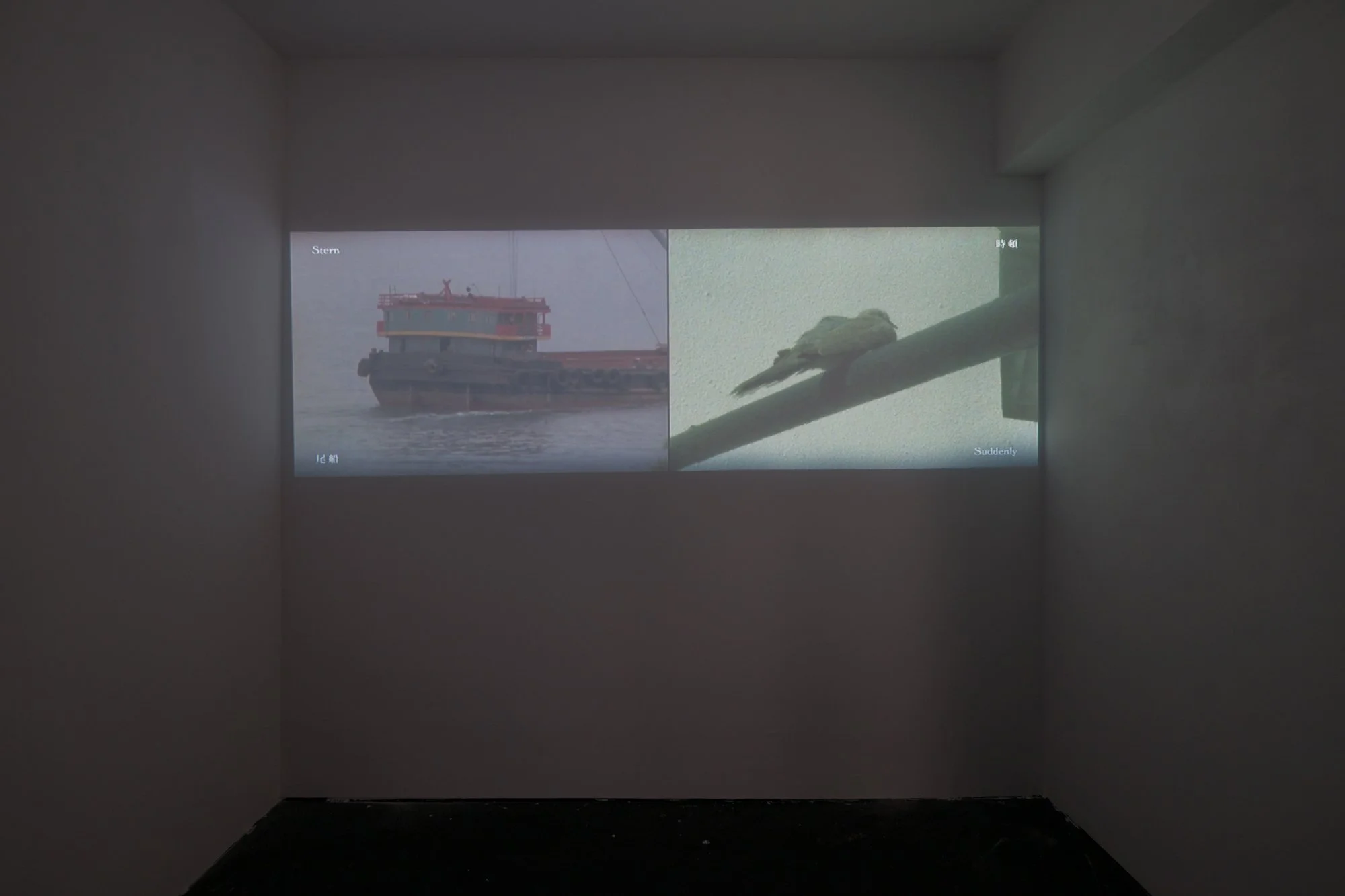
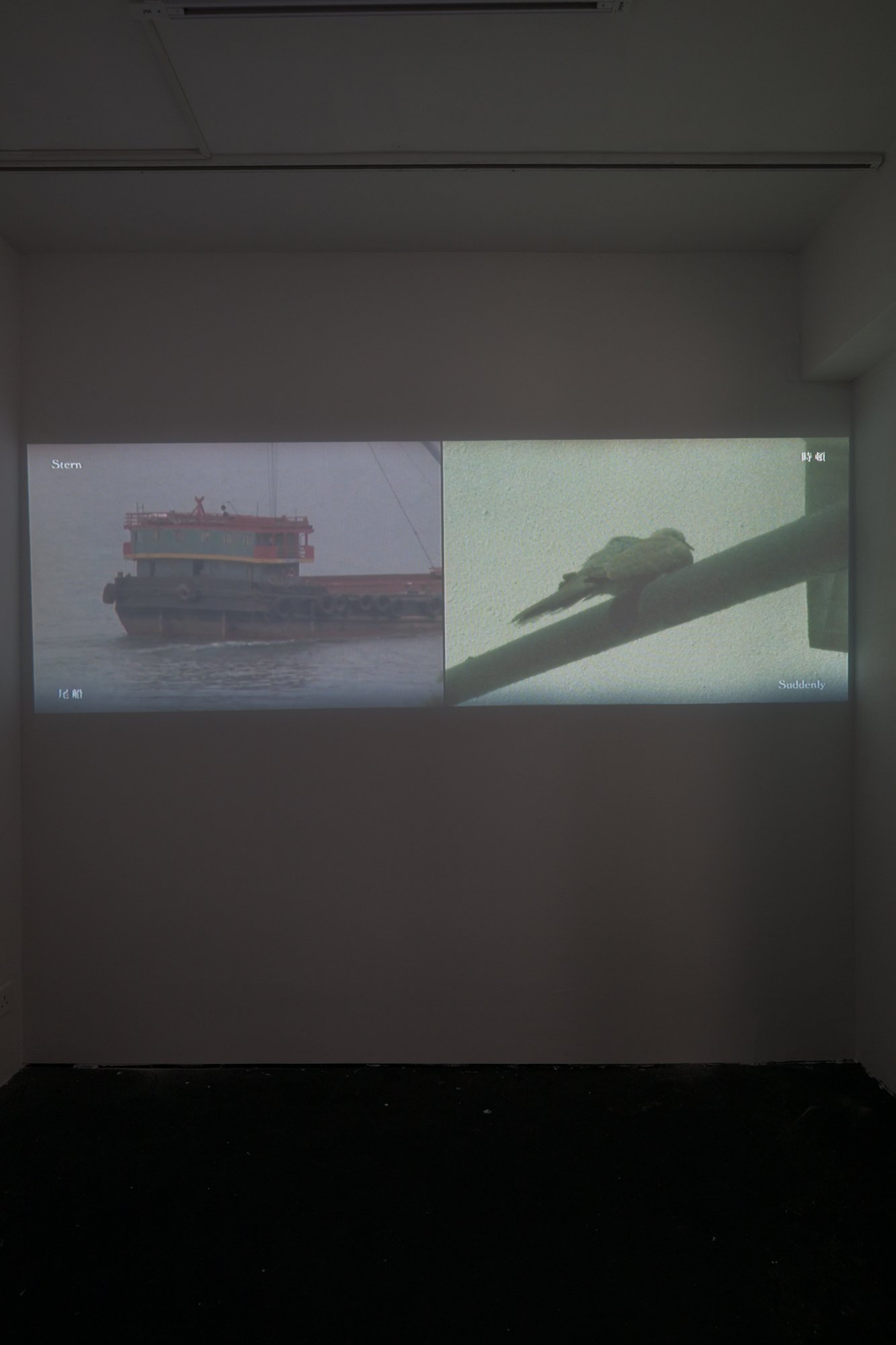
Too Long Ago, Not Far - Winnie Yan - Exhibition view - Photographer: Felix SC Wong @asia_art_hopper
YAN Wai Yin Winnie - Too Long Ago, Not Far
Yan Wai Yin Winnie is a London-based, Hong Kong-born, artist working across moving images, photography and multimedia installation. Too Long Ago, Not Far was shot between 2019 and 2023, when she knew she was about to leave her home for England.
In this two-channel video work, Yan pulls from 華英通語 (interchangeable expressions between Chinese and English), a textbook first published in 1867, New York. The first of its kind, it teaches English pronunciation by using phonetically-similar Cantonese words. The artist intersects her own images with the extracted text, first aligning the English word with its Cantonese pronunciation, then paralleling these with the translation of both terms in their opposite languages.
Yan challenges the way meaning is constructed through visuality, instinctive association, and cultural entanglement. The structure of her work combines repetitive arrangements with visual poetry, enticing the viewer to form their own interpretations by observing the juxtapositions she creates. The visual overlap produces a rupture -or accumulation- in meaning, with the images and words cross-referencing each other. Definitions coalesce into multiple imaginaries, intent becoming both elusive and evident– the transparency melting into uncertainty as the circuitous nature of this video becomes apparent.
An almost flaneur-like walk through the city is presented to us, a prolonged fragmentation of memory and familiarity, the city unwinding as a foreign tongue one needs to walk through to understand. The work interrogates our relationship to language and space: can we learn a language by blindly repeating its words and can we understand a city by repeatedly walking through it ?
忻慧妍 -《在不太遙遠的很久以前》
忻慧妍是一位出生於香港、現居倫敦的藝術家,創作橫跨動態影像、攝影與多媒體裝置。《在不太遙遠的很久以前》攝製於2019至2023年間,正值她即將離開家鄉前往英國之時。
在這件雙頻道影像作品中,忻慧妍取材自1867年於紐約首版的《華英通語》教材。這是史上首部以粵語音近漢字標註英文發音、專為華人學習英語的教科書。藝術家將自己拍攝的影像與摘錄的文字相互交織,先將英語單字與其粵語擬音對齊,然後將這些內容與兩個術語在對方語言中的翻譯並列呈現。
忻慧妍挑戰了透過視覺性、直覺聯想與文化糾纏來建構意義的方式。她作品的結構結合了重複性的編排與視覺詩意,誘使觀眾透過觀察她所創造的並置關係,形成各自的解讀。視覺上的重疊在意義層面產生了斷裂——或是堆疊——使圖像與文字相互參照。各種定義融合為多重想像,創作意圖變得既難以捉摸卻又顯而易見——隨著這部錄像迂迴的本質逐漸顯現,原本的清晰也隨之消融於不確定性之中。
一種近乎漫遊者式的城市遊走呈現在我們眼前,那是記憶與熟悉感的一種漫長碎片化過程。城市像一門外語般緩緩展開,需要一步步走才能理解它。這件作品探究了我們與語言及空間的關係:我們能否藉由盲目複誦單詞來學習一種語言?又能否透過反覆行走於其中來理解一座城市?
